



Case Study
Terminal 1 (T1) is a standalone building which does not have any shading from nearby structures. The building’s extensive glazing creates substantial solar heat gain during the daytime, resulting in cooling challenges. To address this issue, AAHK adopted the Solar Heat-gain Auto Decision On Wind-flow (SHADOW) system, an innovative energy management solution designed to improve operational efficiency.
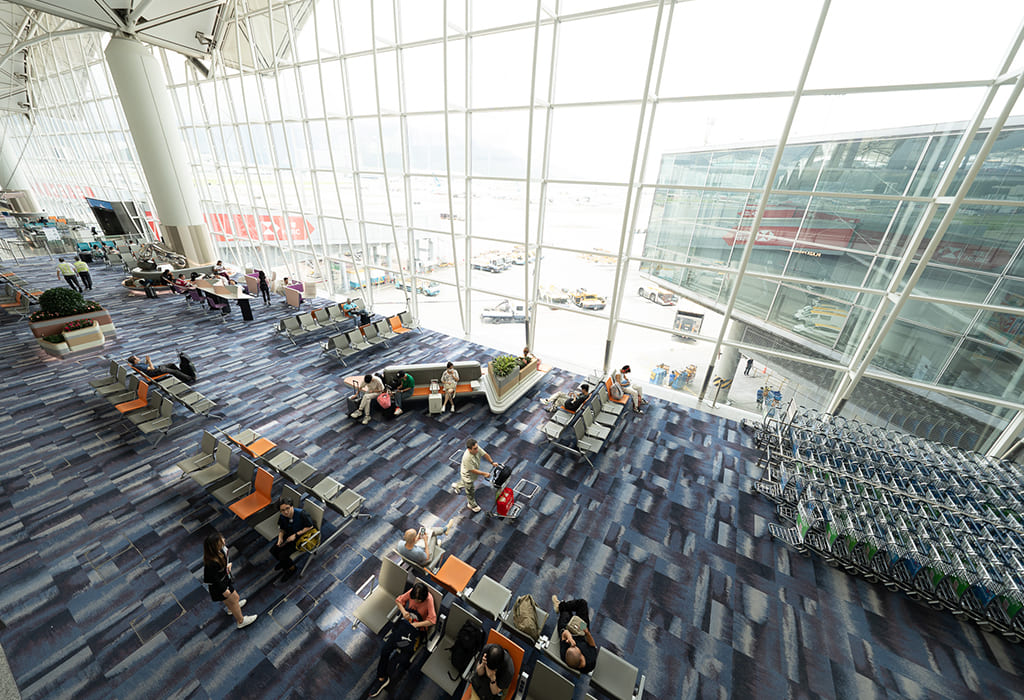
Terminal 1 (T1) is a standalone building which does not have any shading from nearby structures. The building’s extensive glazing creates substantial solar heat gain during the daytime, resulting in cooling challenges. To address this issue, AAHK adopted the Solar Heat-gain Auto Decision On Wind-flow (SHADOW) system, an innovative energy management solution designed to improve operational efficiency.
The SHADOW system for air handling units (AHUs) was implemented to mitigate cooling challenges. This predictive control system adopts a ‘Solar Prediction Dashboard’ to collect and analyse real-time weather data from the Hong Kong Observatory. By combining the weather data and real-time operational data from the ‘Mechanical Building Management System’, the SHADOW system can accurately predict the cooling load required for T1. This ensures that cooling adjustments are made timely and precisely.
The system provides recommendations for the space temperature setpoint of AHUs on the west side (usually the hottest side of the building), allowing an agile and efficient response to changes in weather conditions. This proactive approach minimises overcooling, reduces energy wastage, and optimises air volume and temperature across T1 consistently throughout the day.