


Case Study
While Scope 1 emissions represent a smaller portion of HKIA’s overall footprint, we maintain consistent efforts on directly reducing these emissions by addressing key contributors. While our priorities are strongly directed towards electrification of vehicles and equipment, we also believe it is necessary to use a transitional low carbon fuel for fleet that is ‘hard-to-electrify' in the short term. To bridge this gap, we have piloted the second generation of biodiesel, also known as renewable diesel (RD) or Hydrotreated Vegetable Oil (HVO), within HKIA. The execution of a one-year pilot involved a high level of collaboration with a wider group of stakeholders to introduce a new fuel to Hong Kong. RD is produced from renewable resources such as waste animal fat, vegetable oil, and used cooking oil and has already been adopted at major aviation hubs in Europe and the United States. RD is considered a cleaner fuel when taking into account the life cycle emissions of the feedstock and production. This cleaner fuel offers substantial environmental benefits, including up to 95% reduction in lifecycle GHG emissions compared to petroleum diesel, while also improving air quality.
While Scope 1 emissions represent a smaller portion of HKIA’s overall footprint, we maintain consistent efforts on directly reducing these emissions by addressing key contributors. While our priorities are strongly directed towards electrification of vehicles and equipment, we also believe it is necessary to use a transitional low carbon fuel for fleet that is ‘hard-to-electrify' in the short term. To bridge this gap, we have piloted the second generation of biodiesel, also known as renewable diesel (RD) or Hydrotreated Vegetable Oil (HVO), within HKIA. The execution of a one-year pilot involved a high level of collaboration with a wider group of stakeholders to introduce a new fuel to Hong Kong. RD is produced from renewable resources such as waste animal fat, vegetable oil, and used cooking oil and has already been adopted at major aviation hubs in Europe and the United States. RD is considered a cleaner fuel when taking into account the life cycle emissions of the feedstock and production. This cleaner fuel offers substantial environmental benefits, including up to 95% reduction in lifecycle GHG emissions compared to petroleum diesel, while also improving air quality.
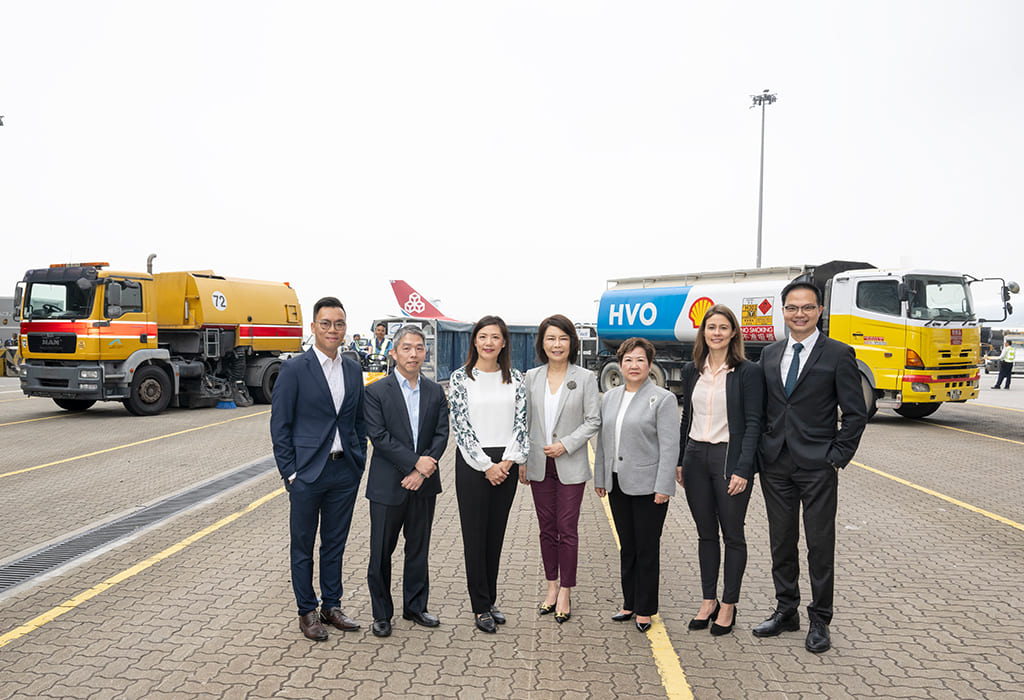
After significant groundwork, in 2024, AAHK launched a pilot project in collaboration with Shell Hong Kong Limited and Hong Kong Air Cargo Terminals Limited (Hactl), making HKIA the first airport in Asia to adopt RD for Ground Support Equipment (GSE).
RD is a drop-in fuel fully compatible with diesel engines of commonly used GSE and other equipment. The first one-year pilot conducted at HKIA comprised of multiple phases, commencing with trialling RD on a small number of GSE with an expansion of its use to additional fleet including non-road mobile machinery (NRMM) and mobile generators in later phases.
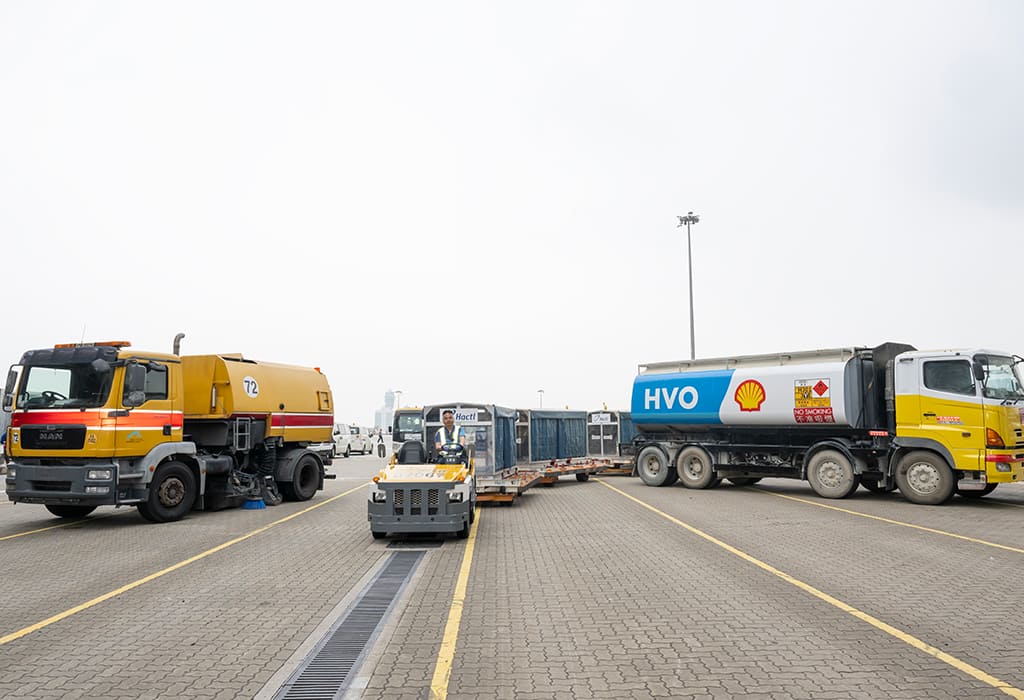
HACTL executed a one-year pilot project with sponsorship by the HKIA Greenovation Fund on the cost premium between traditional diesel and renewable diesel. Following the project's launch, AAHK extended sponsorship to other airport business partners through the same fund to support additional RD pilots across HKIA. Currently, RD has been trialled on equipment such as tractors, rubber removal machines, apron sweepers, forklifts, plane fuelling trucks, as well as mobile and emergency generators.
To enhance collaboration, AAHK has also established a HKIA RD working group for business partners to share insights on RD usage, efficiency and fuel performance as well as other logistical details. By sharing information, the business partners can share their journeys on trialling the new fuel and enable others to scale up efficiently.
Please visit the website for further information regarding the Greenovation Fund.