


Case Study

Terminal 2 Concourse

S2
S2

Scope 2

Emissions from electricity bought or consumed by AAHK.

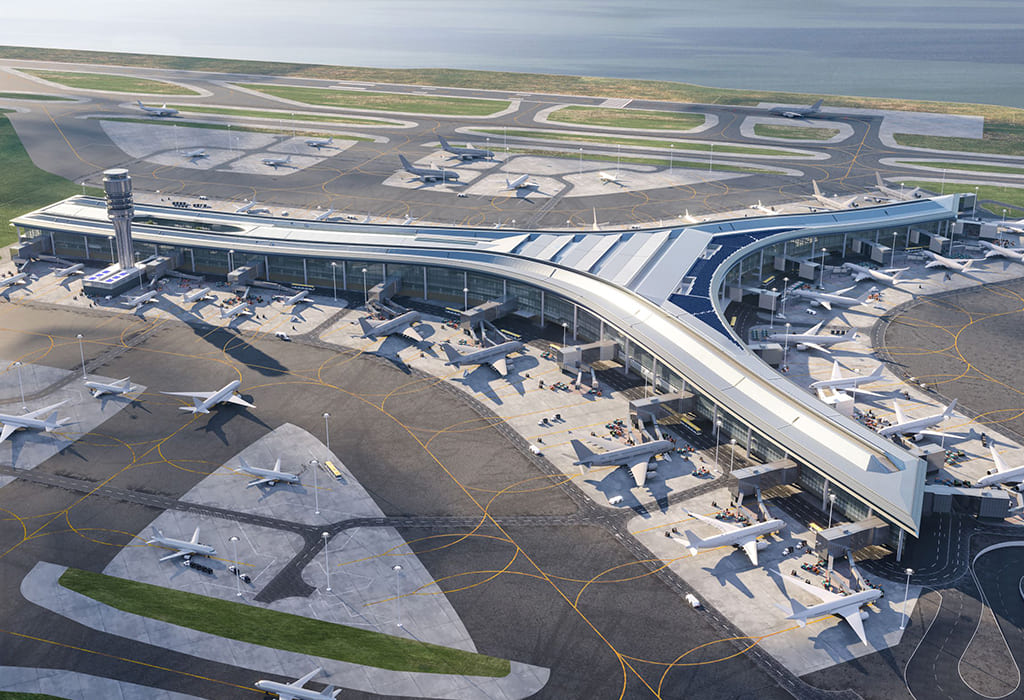
The Terminal 2 Concourse (T2C) is a prime example of HKIA's dedication to green building practices, integrating innovative design elements to minimize environmental impact and enhance energy efficiency. The T2 Concourse (T2C) is a seven-level, Y-shaped airside concourse of 519,000m2 in gross floor area and 345,000m2 in construction floor area.
https://netzerocarbon.hongkongairport.com/wp-content/uploads/2025/06/Terminal-2-Concourse__1024x700-compressed.jpg

The Terminal 2 Concourse (T2C) is a prime example of HKIA's dedication to green building practices, integrating innovative design elements to minimize environmental impact and enhance energy efficiency. The T2 Concourse (T2C) is a seven-level, Y-shaped airside concourse of 519,000m2 in gross floor area and 345,000m2 in construction floor area.

Green design at the forefront

Aimed at expanding the airport’s capacity and operational efficiency while providing a seamless experience for passengers, T2C is designed to embed comprehensive departure, arrival and transfer functions within a sleek, modern structure to cater for the Three-Runway System (3RS). The building’s sustainability features include energy-efficient, passive and smart engineering designs that minimise energy consumption in alignment with green building standards.

T2C incorporates several key green building initiatives, with energy efficiency being a key focus in the design and the landscaped outdoor courtyard will offer a tranquil setting for the enjoyment of passengers waiting at the departure level of the T2C. Some notable green design features include:

  • Building façades equipped with high-energy-performance glazing will offer excellent thermal insulation from solar heat, keeping the building cooler and minimises the need for air conditioning.
  • Optimal spatial planning and maximised access to natural lights are incorporated in the building design, reducing the need for artificial lighting and lowering the energy consumption on lighting systems.
  • Photovoltaic (PV) panels covering a total area of approximately 4,000m2, expected to produce approximately 690 MWh of renewable energy, leading to nearly 270 tonnes of CO2e avoided annually.
  • Demand-controlled ventilation, heat recovery, and free cooling systems have been incorporated into the building design. These systems can adjust ventilation based on real-time passenger levels while recovering heat where possible, and can utilise outdoor air for cooling when conditions permit. This approach reduces unnecessary energy use while maintaining indoor air quality and comfort.
  • Energy-efficient lighting and high-efficiency chiller system designs can contribute to reducing significant operational energy use.
  • Over 60% of construction waste will be recycled and at least 10% of recycled building materials will be reused for exterior and interior components, prioritising waste management strategies and sustainable practices.
  • Seawater cooling will be adopted alongside the use of low-flow sanitary fittings, reducing both energy consumption and potable water consumption.
  • Together with other exemplary features, the project has an estimated annual energy savings of 45,000 MWh, equivalent to 17,500 tonnes CO2e avoided.

T2C has attained the Provisional Platinum rating under Hong Kong Green Building Council’s BEAM Plus New Buildings Version 1.2 certification, the highest rating under the scheme.