



Case Study
The seven-storey HKIA Tower Two opened in July 2022 and achieved a Final Gold rating under BEAM Plus New Buildings Version 1.2. With a gross floor area (GFA) of 21,530m2, the building provides ample office space to help sustain HKIA’s growth, housing several AAHK departments and the security subsidiary, Aviation Security Company Limited (AVSECO).
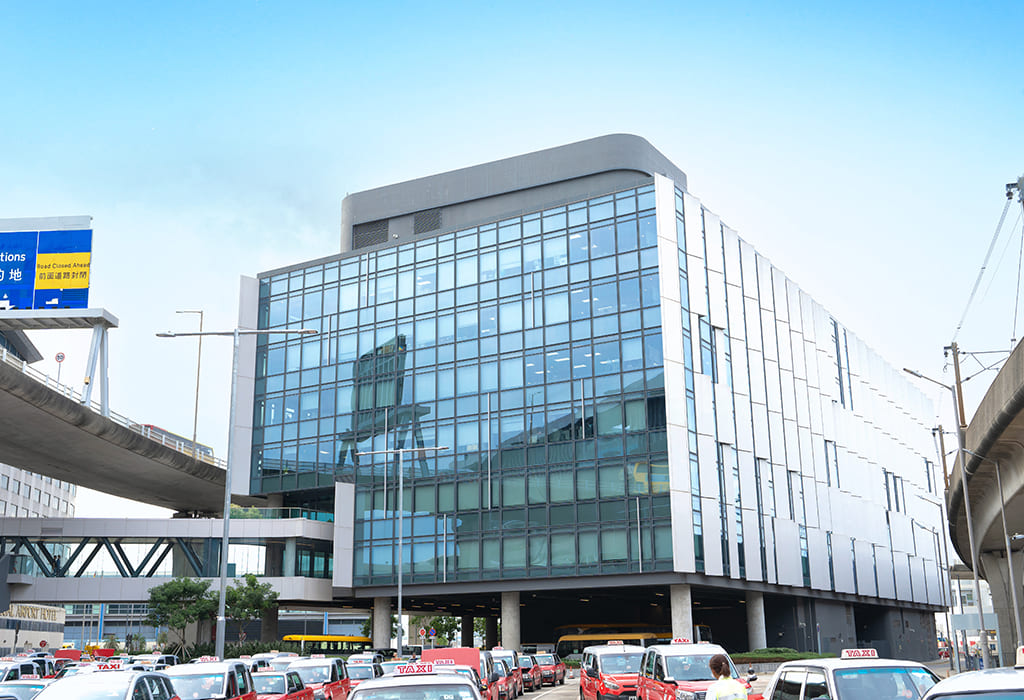
The seven-storey HKIA Tower Two opened in July 2022 and achieved a Final Gold rating under BEAM Plus New Buildings Version 1.2. With a gross floor area (GFA) of 21,530m2, the building provides ample office space to help sustain HKIA’s growth, housing several AAHK departments and the security subsidiary, Aviation Security Company Limited (AVSECO).
The HKIA Tower 2 development has embedded a multitude of sustainable design and construction principles resulting in significant energy savings and emission reductions. Some key green features are highlighted below:
In line with AAHK’s Green Airport Design and Construction (GADC) Strategy, the building is aligned with environmental principles across design and construction aspects including waste and energy management. For further information on GADC, please refer to the GADC case study.
The green building designs of the HKIA Tower 2 also offer numerous non-environmental benefits that significantly enhance the quality of life for occupants and the overall functionality of the building. For instance:
These features collectively contribute to a more comfortable, efficient, and engaging workplace, demonstrating that green building designs can positively impact social aspects and employee satisfaction.